
It Was Never About the Money
That was the quiet thread under all of it. Not "spend more" or "save more" or "manifest abundance." Something simpler, and much harder: that life is meant to be lived and enjoyed now, while it's still in progress, which is the only form it ever comes in. There will be late nights, there will be tough conversations about the budget, and in the same season, often on the same day, there are real things to enjoy, right here, that don't require anything of you.

The Questions Change Before Your Life Does
The thing that got you here often can't take you further, and it usually can't hold what you've already built. In business, past a certain point, the whole game becomes other people, from partners you have to trust, a team you have to actually rely on, and collaborators whose work you can't quietly redo at midnight. In your personal life, the people who love you, your partner, your friends, your kids, your parents, can only get so close to someone who won't be helped. Care that isn't allowed in has nowhere to land, and over time, the people around you learn to stop offering.
What makes this so hard to change is that self-reliance doesn't feel like a wound. It feels like competence.

Let Yourself Be Cared For
The thing that got you here often can't take you further, and it usually can't hold what you've already built. In business, past a certain point, the whole game becomes other people, from partners you have to trust, a team you have to actually rely on, and collaborators whose work you can't quietly redo at midnight. In your personal life, the people who love you, your partner, your friends, your kids, your parents, can only get so close to someone who won't be helped. Care that isn't allowed in has nowhere to land, and over time, the people around you learn to stop offering.
What makes this so hard to change is that self-reliance doesn't feel like a wound. It feels like competence.

What Actually Feeds Your Life
There's a piece of research I think about often here. Behavioral scientists studied how people spend and found that most of us fall somewhere on a spectrum they called tightwads and spendthrifts. Tightwads feel too much of what the researchers named the "pain of paying," so they spend less than they themselves actually want to. Spendthrifts feel too little of it, so they spend more than they want to.
The detail that matters most is this: neither group is happy with how they handle money. Both are living at a distance from what they'd genuinely choose. And when the researchers looked at who was most content, it wasn't the savers, and it wasn't the spenders. It was the people in the middle, perhaps because they were the ones who weren't at war with themselves.

When Your Business Becomes Your Hobby
When you start the company, get the promotion, or sign the dream client, one of the first things you feel is relief. Underneath the relief is an idea, quiet and almost too good to say out loud: finally, you get to live the life you've been building toward.
Maybe that's the house or the car. Maybe it's the time and the money to travel to the places you've loved since you were a kid. Maybe it's something simpler and harder: the ability to rest, to take care of yourself, to take care of the people you love, and to finally pay attention to your own health.
The relief flashes through you each time you take a step closer.
But do you ever actually get there? Or is it just a flash?

Permission You’ll Give Anyone But Yourself
When you start the company, get the promotion, or sign the dream client, one of the first things you feel is relief. Underneath the relief is an idea, quiet and almost too good to say out loud: finally, you get to live the life you've been building toward.
Maybe that's the house or the car. Maybe it's the time and the money to travel to the places you've loved since you were a kid. Maybe it's something simpler and harder: the ability to rest, to take care of yourself, to take care of the people you love, and to finally pay attention to your own health.
The relief flashes through you each time you take a step closer.
But do you ever actually get there? Or is it just a flash?
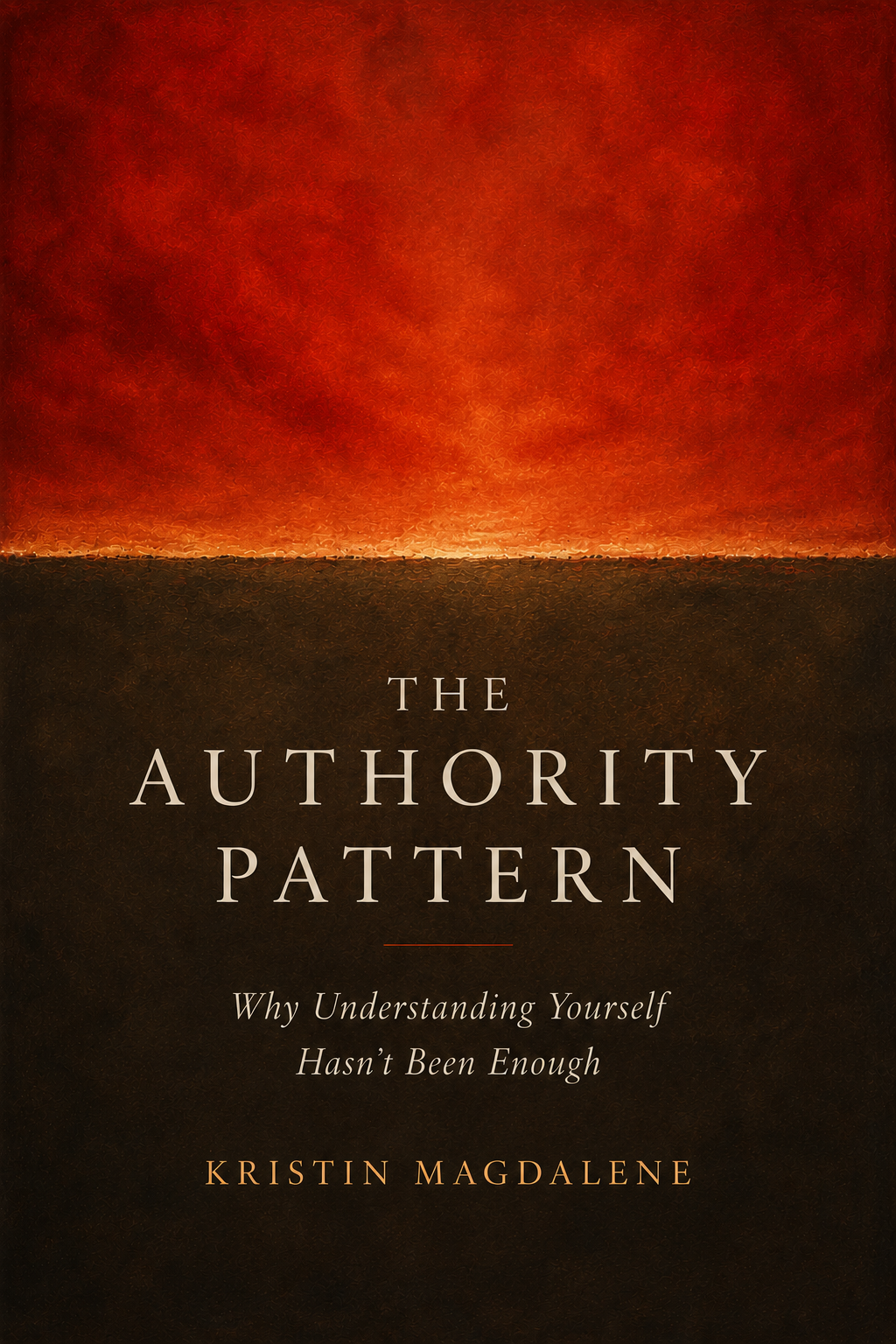
The Book (and Quiz) Are Live
The Authority Pattern is a book about a specific thing: the part of you that took charge decades ago, read the room you grew up in perfectly, and kept you safe. That part is brilliant.
It's also about nine years old, and it's still running your calendar, your company, and your sense of what you're allowed to want. The book is about gently, deliberately putting the right version of you back in charge.
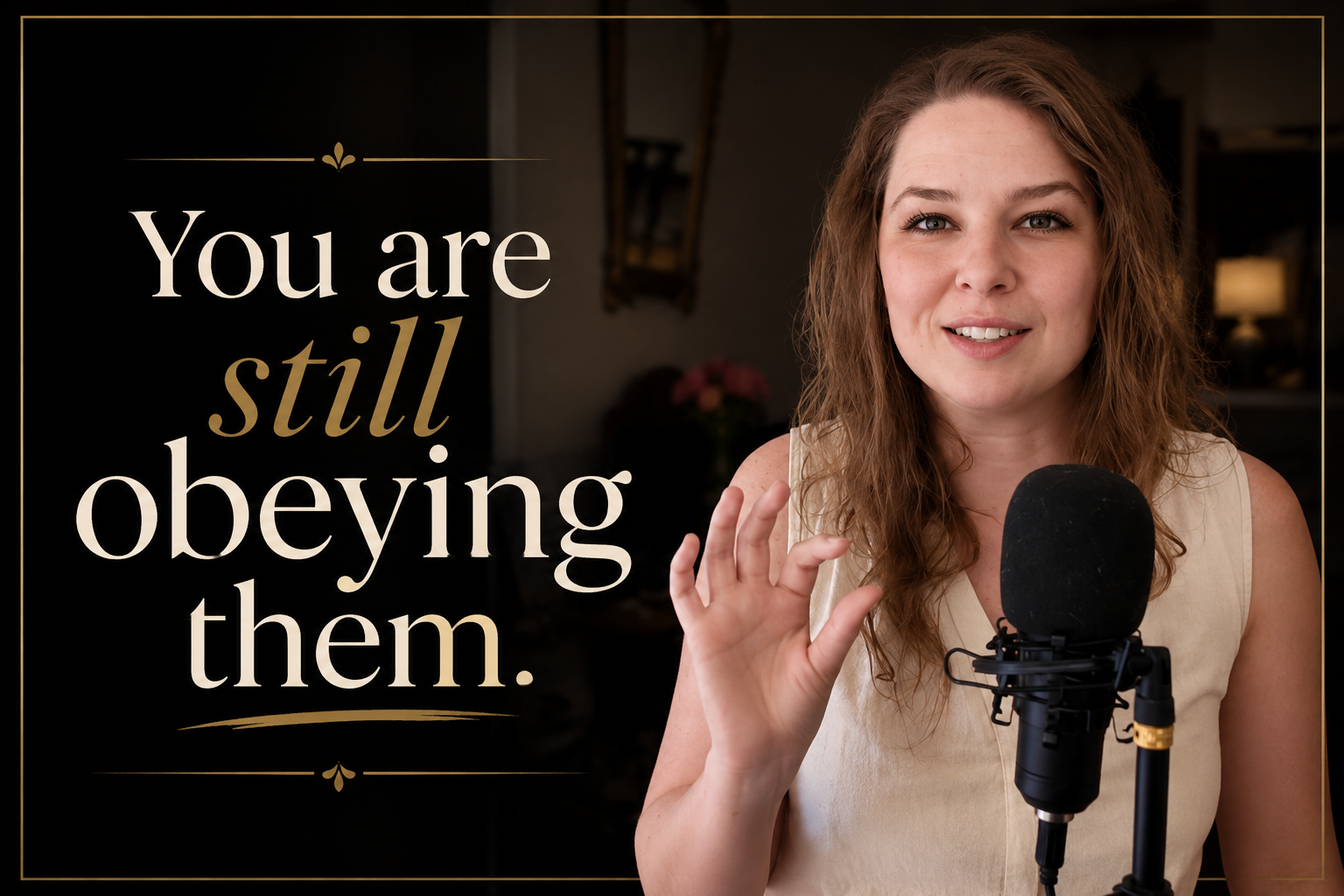
You Can't Think Your Way Out of This | Conscious Disobedience
There's a moment most of my clients can describe with uncomfortable precision.
They're in a room. It could be a boardroom or a conversation, but it’s a moment that matters. And they know exactly what they want to say. They've rehearsed it. They believe it. And yet, something stops them anyway.
Not exactly fear. Something quieter than that. An old instruction, running on autopilot, that says: not yet. Not here. Not you.

The Difference Between Your Nervous System and Your Subconscious Mind
Your nervous system and your subconscious mind are not the same thing.
They are deeply connected, so connected that it's easy to use the terms interchangeably, but they are different systems doing different jobs. If you've ever wondered why calming your nervous system through breathwork or somatic practice doesn't automatically change the pattern underneath, this post is for you.

You Were Never Meant to Bloom in the Sidewalk Crack
For so long we have been given this image of a flower bursting through a crack in the sidewalk. We have been told to bloom where we are planted. We have been told to make it work, no matter what.
And yet there comes a point when, just because you can burst through the tiny crack in the sidewalk, doesn't mean you'll thrive there. It doesn't mean it's the best place for you long term.
And aren't you tired of getting stepped on, all day, every day?

You Can Trust Yourself Enough to Rest
Hypervigilance is not the same as vigilance, and this is a distinction worth making.
Vigilance is appropriate responsiveness: the capacity to notice what's actually happening in a situation and respond accordingly. It's a skill, a valuable one, and it's something you've developed exceptionally well.
Hypervigilance is something different. It's vigilance that never received the update that the threat has passed.

The Impossible Equation Keeping You Stuck Between Success and Invisibility
Being bright, capable, creative, or ambitious in certain environments didn't feel like a gift. It felt like a provocation. Or an invitation for others to make demands. Or a way of making the people around you feel smaller in ways that then became your responsibility to manage.
Some people learned: when I shine, I burn people. When I'm too much, I hurt someone. When I'm successful, I become a resource to be consumed rather than a person to be known.
And so the intelligent adaptation was to dim. To channel the gifts into other people's visions rather than their own. To give away the ideas, the energy, the creativity, freely and generously, so that no one could accuse them of keeping too much for themselves.

Visibility and Access Are Two Different Things
Most people who struggle with visibility developed it in specific environments where being noticed had specific consequences.
Perhaps being seen meant being criticized, where visibility invited scrutiny that felt impossible to satisfy.
Perhaps being noticed meant being needed, where standing out triggered demands on your time, energy, or emotional resources that you couldn't always meet.
Perhaps being watched meant losing autonomy, where other people's attention came with their opinions, their interference, and their attempts to manage or redirect what you were doing.
The nervous system logged all of it.

Why Good Things Make You Nervous (And What to Do)
Your nervous system has a tolerance for goodness. There is a level of ease, safety, and pleasure that it has learned to consider normal, and beyond which it begins to generate signals that something is wrong.
This calibration is a design feature, and like every other calibration we've worked with in The Authority Pattern thus far, it was set in environments you've long since left.

This is Where You Wanted to Start. It’s Finally Time.
The version of yourself that you're about to step into is not new.
It has always been there.
There has always been a part of you calling, leading, guiding, and pointing you toward something larger. You have felt it your whole life, and especially in the moments when you spoke and the room went quiet in a good way, in the clarity that arrives when you stop managing yourself long enough to just be present, and in the vision that kept returning no matter how many times you set it aside.

The Courtroom in Your Head is Still in Session.
At some point, someone whose opinion carried weight said no to you.
Maybe it was explicit, like a parent who dismissed your ambition, a mentor who doubted your capacity, or a partner who couldn't see your vision. Maybe it was subtler than that, like a consistent withholding of validation, a pattern of being overlooked, or an environment where your particular kind of intelligence or creativity was never quite recognized.
Whatever form it took, the no landed, and something in your nervous system made a decision: I'm going to prove them wrong.
Why You Keep Finding Yourself in the Wrong Rooms
Your relational gravity, the kinds of people, rooms, and environments you're consistently drawn toward and that are drawn toward you, is not random. It's calibrated, and it's calibrated early, usually by the environment you grew up in, long before you had any say in the matter.
If you grew up in an environment defined by emotional immaturity, by criticism disguised as feedback, by intensity mistaken for care, by love that came with conditions attached, your nervous system built a map of what familiarity feels like. Because familiarity, to the nervous system, registers as safety.

How You Stopped Speaking In Your Own Voice.
Everyone, at some point, has been told that their natural expression is too much.
Too honest. Too direct. Too disruptive. Too intense. Too idealistic. Too unconventional.
Sometimes it comes from people who are genuinely trying to protect you. It can come from parents who know the world can be unkind, partners who worry about the risk, or colleagues who've been burned by going out on a limb. Their caution comes from love, or from their own fear, or both.

The Path Is Becoming Visible.
Once the emotional foundation is stable, once the nervous system has learned it doesn't need to run constant protection protocols, different kinds of questions surface.
The new questions are more interesting.
Can I trust my own judgment? What do I actually want? What does my leadership look like when I stop performing it and start inhabiting it? Who am I, specifically, distinctly me, when I'm not performing or managing myself for someone else's comfort?
These are the questions of someone who has created enough internal space to finally be curious, and they deserve real answers.

You’re Not Too Emotional.
In self-improvement circles, there's a strong emphasis on feeling your feelings, and this is generally excellent advice.
The problem is how it tends to get interpreted.
Many people hear "feel your feelings" and translate it into: sit with this, stay with this, honor this, process this. Which turns into: hold this, carry this, make sure you've fully experienced every dimension of this before you move on.
But emotions aren't meant to be permanent. They're meant to be information.